 Click to enlarge
|
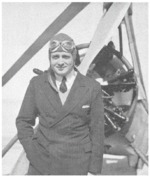
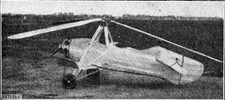
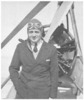
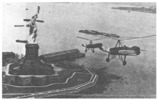
Spanish engineer and aeronautical scientist, inventor of the autogyre Juan de la Cierva was born in Murcia in 1895 and since childhood he showed great interest in aeronautics. When he was just 16, he and two colleagues built his first biplane BCD-1. Since there wasn’t Aeronautical Engineer career in Spain, he studied Civil Engineering and ended it in 1919. The same year he designed the bomber biplane C-3. After extending his studies of Aeronautics in England, he designed the autogyro, based on the rotation of paddles located over the aircraft. It was patented in 1920 and its first model, the C-4, flew successfully in 1923 in Madrid. Between 1920 and 1936 he continued to refine its prototypes, performing about 40 models. In December 1936, he died in the crash of the airliner in which he was traveling. Juan de la Cierva was recognized internationally and praised by Thomas A. Edison and Henry Ford, with the delivery of the Gold Medal at the Guggenheim International Exhibition in Chicago. |
||||||||||||||||||||||||||||||||
|
variant spelling: de la Cierva, Juan; de la Cierva y Codorníu, Juan |
||||||||||||||||||||||||||||||||
| Curriculum vitae |
|
|||||||||||||||||||||||||||||||

 DMG-Lib
 Europeana