Romanian University
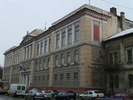
On the cultural firmament of Cluj-Napoca, technical education was stated early in the last century.
Making Romanian national unitary state on 1 December 1918 opened new perspectives for education at all levels. On February 1, 1920 Industrial Superior School was established, the new institution then going through a series of reorganizations and, in 1922, became School of technical conductors. It was the only school in the country, electro mechanics specialized, precursor of Cluj Polytechnic Institute. Another technical profile school was founded in 1920, the School of Public Works Conductors, with specific in roads and bridges, true precursor of the Faculty of Civil Engineering. This school enjoyed a significant reputation in the Romanian industry was reorganized in 1937 as the School of electromechanical engineers.
In 1947, following a memorandum addressed to the Ministry of Education regarding the establishment of a polytechnic college in Cluj with three faculty construction, electromechanical and forestry, by the education reform law in august 1948, was created Mechanic Institute in Cluj, with a faculty two sections: thermo-technique and machine tools. Increased need for technical staff made the Mechanic Institute in 1953 to turn into Polytechnic Institute of Cluj.
After 1989, the Romanian higher education returned to the Romanian tradition, correlated with the Western system. Since 1992 Polytechnic Institute changed its name to the Technical University of Cluj-Napoca, and the three existing faculties at the time, by restructuring, were transformed in seven faculties: Computer Science and Automation, Electronics, Telecommunications and Information Technology, Electrical Engineering, Civil Construction, Machine Design, Mechanics, Materials Science and Engineering and Technical, Economics and Administration College. Since the academic year 1998/1999 the structure of the Technical University of Cluj-Napoca was filled with the Faculty of Architecture and Urbanism.
Currently, the Technical University of Cluj-Napoca trains specialists for technical (mechanical engineering, electrical, building and architecture) through long and short term studies, postgraduate and doctoral school, the number of students from UTC-N exceeds 12000.
Scientific research has been a key concern of professors and researchers of UTCN. Scientific potential of the University entitled it to organize a series of large-scale scientific meetings with a wide participation of Romanian and foreign specialists. Practical results of research are reflected in numerous contracts and projects with national and international funding, of which the most important are those with: CNCSIS, ANSTI, PNCDI and those funded by the European Commission: EUREKA, COPERNICUS, COST, FP5 and FP6.
University connection to European requirements is reflected by an account of international conventions to which it is party and a wide range of educational programs specifically European: TEMPUS-PHARE, SOCRATES, ERASMUS, LEONARDO, CEEPUS. Also were completed a series of conventions, international agreements and protocols with universities in France, Italy, Germany, USA, Austria etc. UTC-N was accepted in 2003 as a member of the European Association of Universities.
Technical University of Cluj-Napoca is today a modern technical higher education institution, in a stage of genuine revival, authentic confirming its availability of scientific and technical creativity.
|


 Newsletter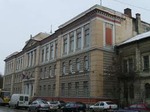
 Premi per ingrandire


 DMG-Lib
 Europeana
