Estructura del mecanismo |
| Función |
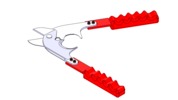
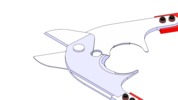
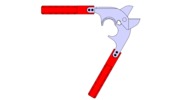
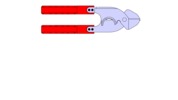
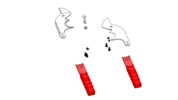
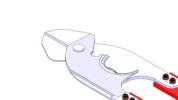
This invention is about a wire cutters in which one the curve sharp edge is made with three cut sections with different lean angles. A classic wire cutters cut an electric wire comprising a plastic sheath and a metallic heart. However during the cut, the wires moved to the both ends of the sharp edges because of the movement of the both jaws. Consequently, the user has to open the hand in oder to cut the wires. Moreover, the sharp edge has a fixe curve and an angle with a lean which can not help the efficiency of the cut and which needs lots of efforts to cut the wires. This invention presents a curve sharp edge comprising a central section with a high lean angle, in that way it is easy to cut the wires. Indeed, this central section is between both sections comprising low lean angles; this system allows to move the wire on the central edge and to cut effectively, with less efforts. |
| Comment |
Author : Romain Giry
IFMA (French Institute for Advanced Mechanics) - http://www.ifma.fr
Clermont-Ferrand, France
The model and all attached items were made within this context. |
| Dimensión del mecanismo |
plano |
| Número de elementos |
16 |
| movimiento motor |
Movimiento del sistema de referencia |
| Grados de libertad |
1 |
| Número de entradas |
1 |
| Número de seguidores |
1 |
| Capacidad de rotabilidad |
no |
| Capacidad de rotabilidad del elemento de entrada |
no |
| Posición relativa entre motor y salida |
coaxial |
| |
Aplicación |
| Área de aplicación |
Production and Various fields |
| Ejemplos de aplicación |
Used by electicians to cut electric wires or by person to cut several kinds of wires but with limited sections because of the size of the wire cutters. |
| |


 Newsletter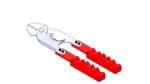
 Animations
 CAX files
 Videos
 Images

 DMG-Lib
 Europeana
 IFMA
IFMA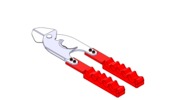
 Pinche para ampliar