
 Click to enlarge
|
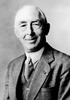
French engineer and manager of business. Pierre-Jules Boulanger, often known simply as Pierre Boulanger was a French engineer and businessman. He directed Citroën as a vice-president and as chairman from 1935 until his death in a car accident. He met Marcel Michelin (nephew of Édouard Michelin). After military service, he went to the United States where he undertook various trades. He returned to France in 1914 and was mobilized as corporal, becoming an aerial photographer. He performed well in the service and finished the war with the rank of Captain, decorated with the Military Cross and the Legion of Honour. As part of the policy to reduce costs, in 1936, Boulanger initiated a project to create the TPV (short for 'Très Petite Voiture' meaning 'very small car'), which became 2CV in 1948. His specification for the new model was characteristic of the man: the 2CV was conceived as an economical car, both to buy and to maintain. This allowed both fast manufacture and good reliability. For simplified manufacturing, the same screw was used practically everywhere and the motor could be put in place very easily, only held by four screws. The same applied for the sheet metal bodywork. For reliability, longevity was favoured rather than performance, which translated technically into a larger play between pieces (in millimetres) and, above all, simple but effective solutions to problems. When Michelin, the famous tyre maker, bought out Citroën in 1935, the Michelin brothers - founders of the family business - had the idea of creating an economical car for the peasants and others with small incomes. They asked Pierre Boulanger, the new boss of Citroën, to make a market study to sound the expectations of future clients regarding such a car project. Following this study, Boulanger wrote the specification which would be so close to the heart of the largest pre-war French car maker. The original specification : “Four wheels under an umbrella” ; space for 4 adults (and tall enough to take the owner and passengers to church in their Sunday-best hats) ; big enough to carry 50kg of potatoes ; within the 2 horsepower fiscal bracket ; front-wheel drive ; Maximum speed: 60km/h ; 3-speed gear box (in fact, there was also a supercharger position, which acted as a fourth gear) ; aasy to maintain ; able to carry a basket of eggs over a ploughed field without breaking one of them ; 3 litres per 100km fuel consumption (about 90-95 miles/gallon) ; cheap. To transform this dream into reality, Boulanger used the services of André Lefebvre as engineer, and Flaminio Bertoni, whose nickname was « gold fingers », as stylist. This team gave birth to one of the most iconic cars of the 20th century. |
||||||||||||||||||||||||||||||||||||||||||||||||||||||||||||||
|
variant spelling: BOULANGER, Pierre, Jules |
||||||||||||||||||||||||||||||||||||||||||||||||||||||||||||||
| Curriculum vitae |
|
|||||||||||||||||||||||||||||||||||||||||||||||||||||||||||||

 DMG-Lib
 Europeana