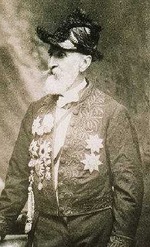
 Click to enlarge
|
French naval engineer, one of the foremost of his time, and a proponent of the "Jeune École" philosophy of using light. He entered the Paris École polytechnique in 1858. At exiting the school, he chose the field of Naval Engineering (Corps du génie maritime). His role model was Henri Dupuy de Lôme, who had designed the first ironclad warship in France. Bertin came to be known for his innovative designs, often at odds with conventional wisdom, and won international recognition as a leading naval architect. In 1871, he also became a doctor of laws, showing great versatility of talents. Bertin's real legacy for Japan was his creation of a series of modern shipyards, most notably Kure and Sasebo. During World War I, those very yards built twelve destroyers for France’s embattled fleet. After his death, a light cruiser of the French Navy, the Émile Bertin, was named in his honour. Émile Bertin also invented the twin-oscillographer (to study roll and pitch). |
|||||||||||||||||||||||||||||||||||||||||||||||||||||||||||
|
variant spelling: Bertin, Louis-Émile |
|||||||||||||||||||||||||||||||||||||||||||||||||||||||||||
| Curriculum vitae |
|
||||||||||||||||||||||||||||||||||||||||||||||||||||||||||



 DMG-Lib
 Europeana